

Prioritization questions are among the most challenging parts of the NCLEX exam. These questions test your ability to identify which patient requires immediate attention and which nursing action should be performed first.
The 2026 NCLEX exam continues to emphasize clinical judgment, patient safety, and decision-making skills. Understanding prioritization frameworks such as ABCs (Airway, Breathing, Circulation), Maslow’s hierarchy, and safety principles can significantly improve your score.
In this guide, you will practice NCLEX prioritization questions with detailed rationales to help you prepare confidently for the Next Generation NCLEX (NGN).
Why Prioritization Questions Matter in NCLEX
NCLEX prioritization questions evaluate whether nursing candidates can:
- Identify life-threatening conditions
- Recognize unstable patients
- Apply clinical judgment
- Prevent complications
- Deliver safe patient care
These questions are common in both NCLEX-RN and Next Gen NCLEX exams.
Before attempting these questions, review our complete guide on NCLEX Practice Questions

You can also improve medication safety using our NCLEX Pharmacology Questions With Rationales
NCLEX Prioritization Strategies
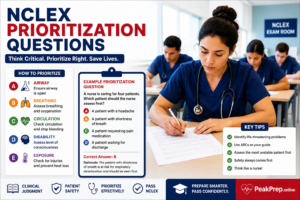
1. Use the ABC Rule
Always prioritize:
- Airway
- Breathing
- Circulation
Patients with airway or breathing problems usually come first.
2. Identify Unstable Patients
Unstable patients require immediate nursing intervention.
Examples:
- Chest pain
- Respiratory distress
- Active bleeding
- Altered mental status
3. Safety First
Always prevent harm and complications before addressing non-urgent issues.
NCLEX Prioritization Questions With Answers and Rationales
Question 1
A nurse is caring for four patients. Which patient should the nurse assess first?
A. A patient with diabetes reporting hunger
B. A patient with chest pain and shortness of breath
C. A patient requesting pain medication
D. A patient awaiting discharge instructions
Correct Answer:
B. A patient with chest pain and shortness of breath
Rationale:
Chest pain and shortness of breath may indicate a life-threatening cardiac or respiratory emergency. According to ABC priorities, breathing and circulation issues must be addressed immediately.
Question 2
Which patient should the nurse see first?
A. A postoperative patient with a pain level of 7/10
B. A patient with oxygen saturation of 84%
C. A patient requesting assistance to the bathroom
D. A patient asking about discharge medications
Correct Answer:
B. A patient with oxygen saturation of 84%
Rationale:
An oxygen saturation of 84% indicates hypoxia and impaired breathing. Airway and breathing issues always take priority.
Question 3
A nurse receives report on four patients. Which patient requires immediate intervention?
A. A client with fever of 100.2°F
B. A patient with sudden confusion and agitation
C. A patient with mild nausea
D. A patient requesting a blanket
Correct Answer:
B. A patient with sudden confusion and agitation
Rationale:
Sudden confusion may indicate hypoxia, stroke, or neurological deterioration requiring urgent assessment.
Question 4
Which action should the nurse perform first?
A. Administer scheduled antibiotics
B. Assess a patient with difficulty breathing
C. Document patient findings
D. Change wound dressing
Correct Answer:
B. Assess a patient with difficulty breathing
Rationale:
Breathing difficulties are potentially life-threatening and require immediate assessment.
Question 5
A nurse is assigned four clients. Which client should be prioritized?
A. A stable patient awaiting discharge
B. A patient with blood glucose of 55 mg/dL
C. A patient requesting water
D. A patient needing linen change
Correct Answer:
B. A patient with blood glucose of 55 mg/dL
Rationale:
Hypoglycemia can rapidly become life-threatening and requires immediate treatment.
More NCLEX Prioritization Practice Questions
Question 6
A patient develops stridor after surgery. Which action should the nurse take first?
A. Notify family members
B. Assess airway patency
C. Document findings
D. Administer oral fluids
Correct Answer:
B. Assess airway patency
Rationale:
Stridor indicates airway obstruction and is a medical emergency.
Question 7
Which patient should the nurse assess first after shift report?
A. A patient with potassium level of 2.9 mEq/L
B. A patient with mild headache
C. A patient requesting breakfast
D. A patient scheduled for discharge
Correct Answer:
A. A patient with potassium level of 2.9 mEq/L
Rationale:
Severe hypokalemia can cause cardiac dysrhythmias and requires immediate attention.
Question 8
Which patient requires immediate nursing assessment?
A. A client with new onset wheezing
B. A patient requesting pain medication
C. A patient asking for discharge papers
D. A patient sleeping comfortably
Correct Answer:
A. A client with new onset wheezing
Rationale:
Wheezing may indicate airway compromise and respiratory distress.
Question 9
A nurse notices a postoperative patient has excessive bleeding at the surgical site. What should the nurse do first?
A. Notify the healthcare provider
B. Reinforce the dressing
C. Assess vital signs
D. Administer pain medication
Correct Answer:
C. Assess vital signs
Rationale:
The nurse should first assess circulation and hemodynamic stability.
Question 10
Which patient is the highest priority?
A. Patient with asthma and difficulty speaking
B. Patient with constipation
C. Patient requesting food
D. Patient waiting for lab results
Correct Answer:
A. Patient with asthma and difficulty speaking
Rationale:
Difficulty speaking in asthma may indicate severe respiratory compromise.
Tips to Answer NCLEX Prioritization Questions Correctly
Focus on Life-Threatening Problems
Always identify:
- Airway obstruction
- Respiratory distress
- Circulation issues
- Altered consciousness
Use Clinical Judgment
Think like a nurse:
- Who is unstable?
- Who can deteriorate fastest?
- Which condition threatens life?
Avoid Assumptions
Choose answers based only on the information provided.
Common Topics Tested in Prioritization Questions
NCLEX prioritization questions commonly include:
- Respiratory emergencies
- Cardiac conditions
- Postoperative complications
- Neurological deterioration
- Medication reactions
- Electrolyte imbalances
- Infection and sepsis
To strengthen your preparation further, explore our

NCLEX Preparation Philippines Guide
NCLEX prioritization questions are critical for passing the nursing licensure exam. The more you practice identifying unstable patients and urgent conditions, the more confident you will become during the real exam.
Consistent practice with detailed rationales can help improve your clinical judgment and decision-making skills.
Continue practicing daily and strengthen your preparation using our complete NCLEX resources at PeakPrep.online.
Ready to Pass the NCLEX Exam?
Join our NCLEX crash course for:
- Live Zoom revision classes
- Daily practice questions
- Detailed rationales
- Exam strategies
- Study plans for international nurses
Start preparing smarter with PeakPrep.online today.